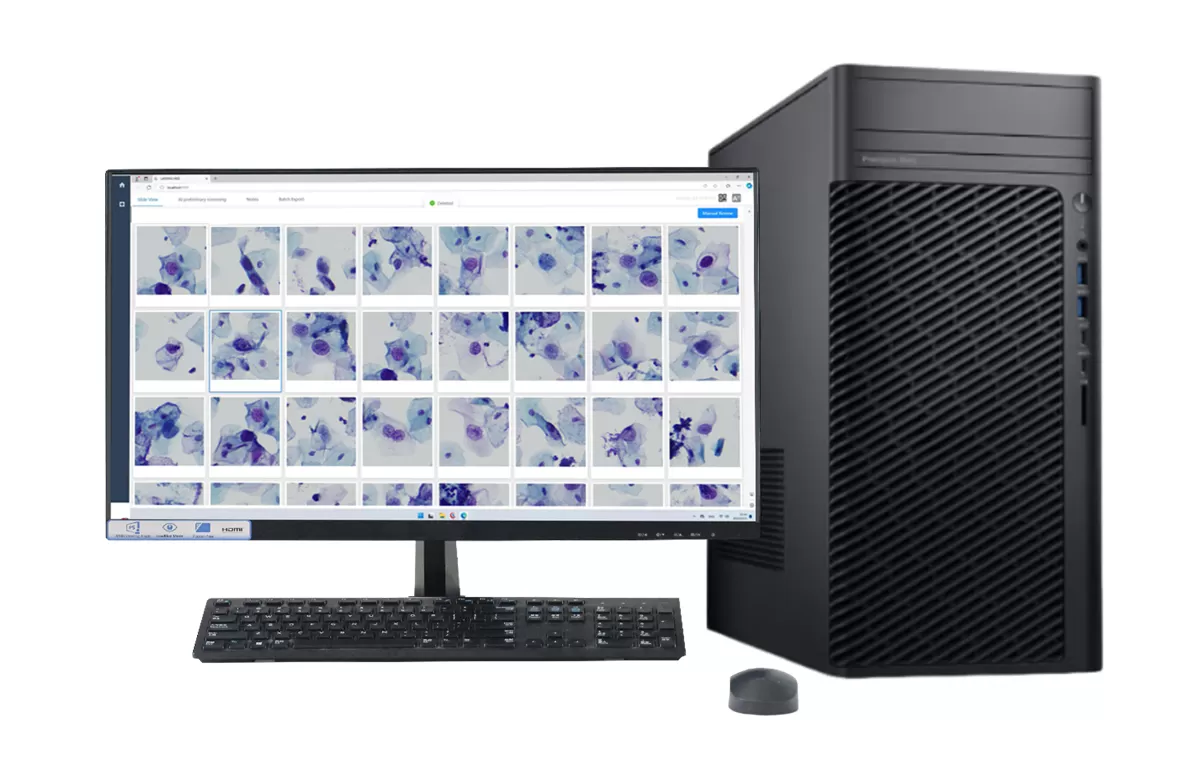
Cervical cytology AI-assisted diagnostics refers to the process where cervical exfoliated cells are prepared into a liquid-based cytology slide, then imaged using a digital slide scanner to produce a digital slide. This slide is then analyzed using AI-based computer technology, with the AI determining a negative or positive result and filtering out suspicious abnormal cells. This assists cytopathologists in making a faster and more accurate cytopathological diagnosis.

An AI-assisted cervical cytology examination system should include three main parts: the scanning workstation, digital diagnostics, and data storage.
The scanning workstation converts pathological slides into digital pathology images using a scanner. The scanned images should highly reproduce the characteristics of the original slides, be clear, have no color differences, and no stitching marks. The system should support both single-layer and multi-layer scanning.
(1) Recommended parameters: A 40× objective lens can be used, and when fulfilling the condition that the original pixel density is less than 0.25μm/pixel, a 20× objective lens is recommended. The field of view diameter should be 25mm; scanning speed for a 15mm×15mm area should not exceed 150s; scanning resolution should be less than or equal to 0.25μm/pixel.
(2) Creating a focus model: The scanning image should be accurately focused with relatively complete preservation of cellular morphology, cell membrane, and internal nuclear details. An unfocused scanning image manifests as blurred cell structures and ghost images.
(3) Scanning image quality defects and solutions:
① If the image is unclear or obstructed, possible reasons include an unclean scanning lens, debris or foreign objects on the slide, or inaccurate focusing. The lens and slides should be cleaned, and technical personnel should be contacted for maintenance and adjustments.
② If the image is misaligned or improperly stitched, the slide should be rescanned immediately, or technical personnel should be contacted for adjustments.
③ If the image flickers, it may be due to a light source failure, poor camera connection, or exposure issues. The light source should be replaced, and connection lines should be checked promptly.
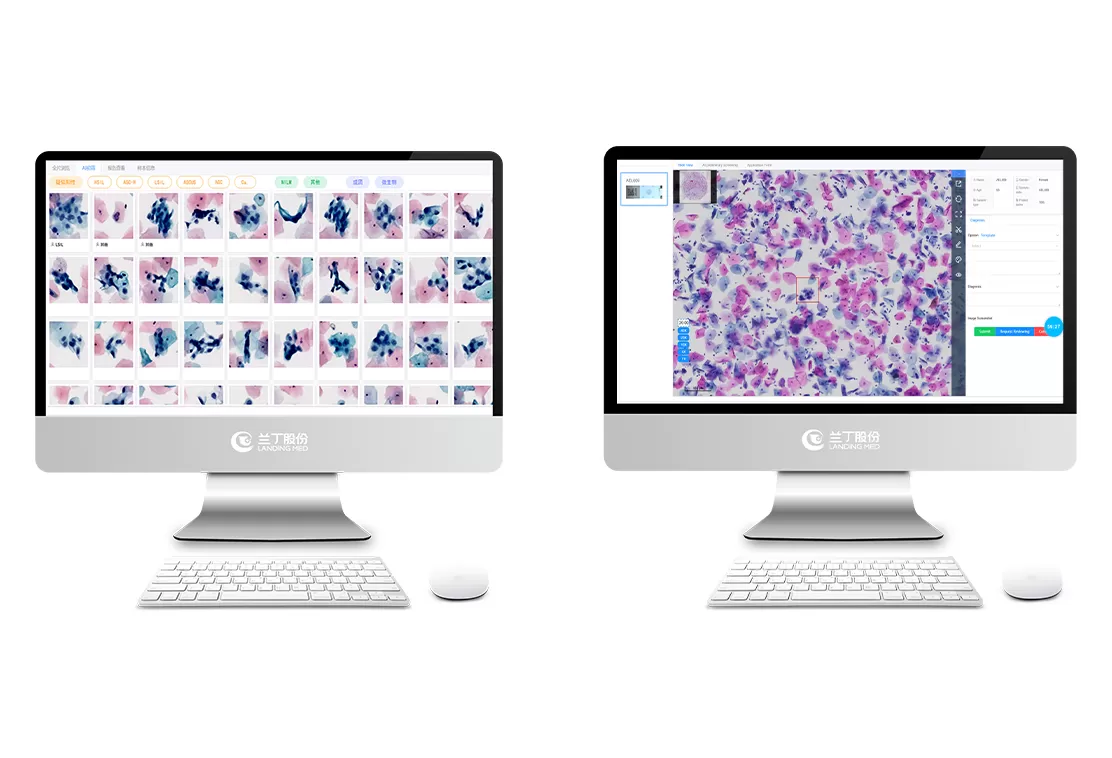
Using deep learning and other AI technologies, the digital pathology images are detected and analyzed intelligently. Fields of view with positive or suspected positive cells are presented to pathologists, aiding them in making the final cytopathological diagnosis.
This mainly refers to the storage and management of digital pathology images, stored according to specific rules to facilitate subsequent access, processing, and analysis.


 fr
fr  es
es  CN
CN