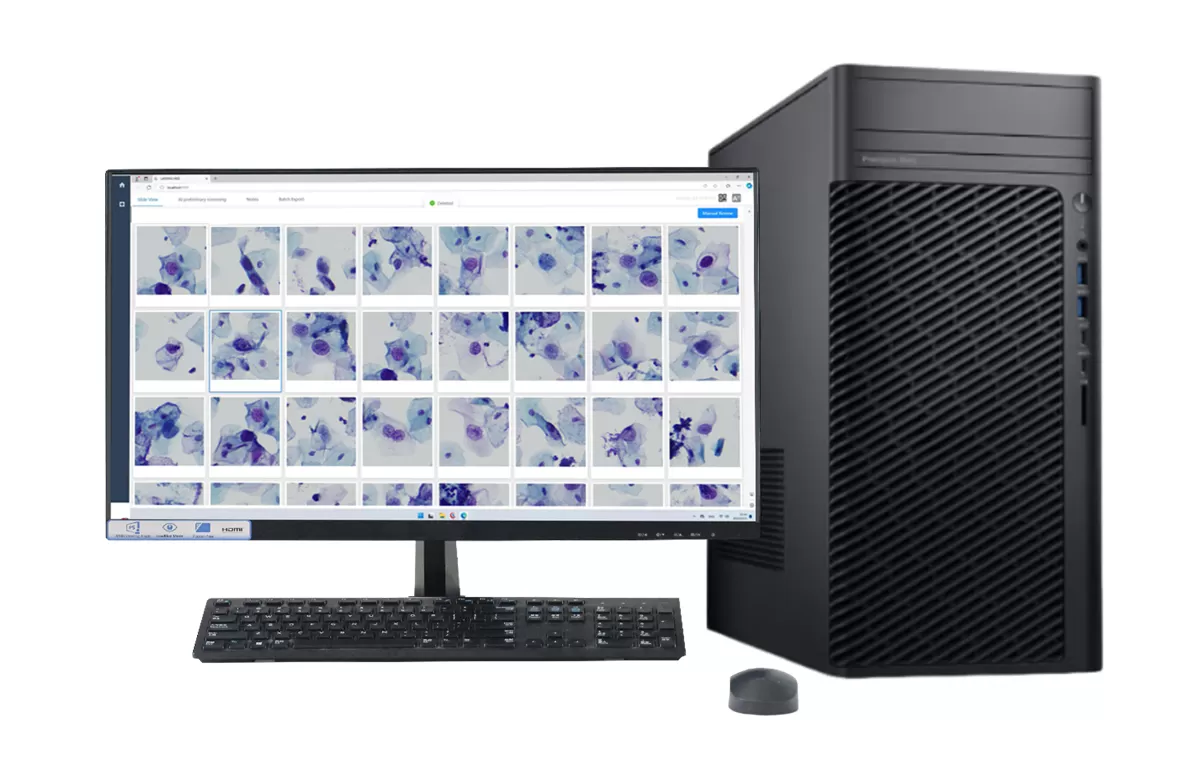
In today’s evolving pathology landscape, laboratories face a critical decision: continue relying on conventional optical microscopes or transition to digital pathology slide scanners. Also known as whole slide imaging scanners, these advanced devices capture entire glass slides in high-resolution digital format, enabling a fully digital workflow. This shift is transforming diagnostic precision, efficiency, and collaboration. This article explores how digital pathology slide scanners compare to traditional microscope imaging, highlighting key differences, benefits, and practical considerations for modern labs.
Optical microscopy has been the cornerstone of pathology for over a century. Pathologists manually examine glass slides under a microscope, adjusting focus, magnification, and stage position to identify cellular details and abnormalities.
While reliable, this approach has significant drawbacks in contemporary practice:
Physical constraints and fatigue: Prolonged microscope use leads to eye strain, neck pain, and back discomfort. Studies show pathologists can experience musculoskeletal issues after just a few hours of continuous viewing.
Limited collaboration and sharing: A physical slide can only be viewed by one person at a time. Consultations require shipping slides or scheduling in-person reviews, delaying diagnoses—especially in urgent oncology cases.
Storage and archiving challenges: Glass slides occupy physical space, degrade over time, and are vulnerable to breakage or loss. Retrieving historical cases for review or research is time-consuming.
Inconsistent documentation: Capturing images requires attaching a camera to the microscope, producing only partial snapshots rather than complete slide representations. These images vary in quality depending on lighting and operator skill.
Scalability issues: High-volume laboratories struggle to maintain efficiency with manual review, particularly during screening programs or large research studies.
These limitations have driven the adoption of digital solutions, particularly the digital pathology slide scanner series that address these pain points directly.
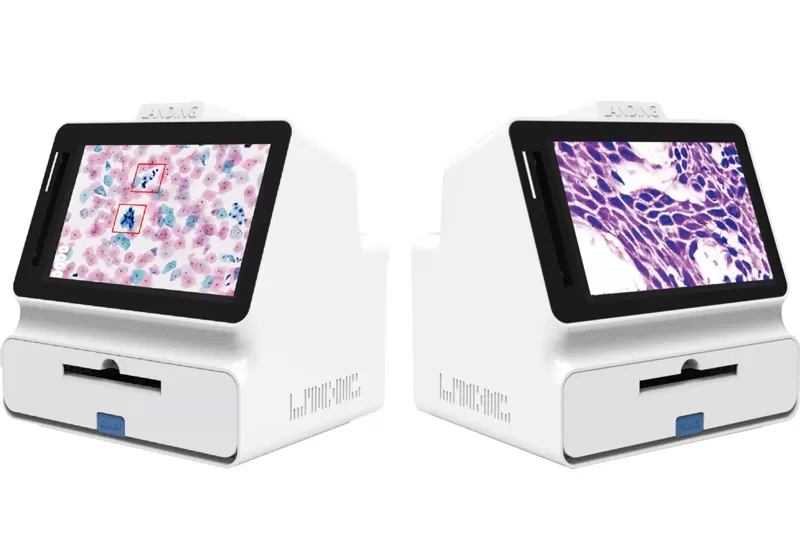
Digital pathology slide scanners, often referred to as whole slide imaging scanners, digitize entire glass slides at microscopic resolution—typically 20x or 40x magnification—creating a seamless virtual slide that can be viewed, zoomed, and annotated on a computer screen.
Here are the primary advantages over traditional microscope imaging:
Ergonomics and pathologist comfort: Viewing slides on a monitor eliminates prolonged hunching over an eyepiece. Pathologists can work in a comfortable posture for longer periods with reduced physical strain.
Enhanced collaboration and remote diagnostics: Digital slides can be shared instantly via secure cloud platforms. Multiple specialists can review the same case simultaneously, regardless of location—ideal for tumor boards, second opinions, or global consultations.
Permanent digital archive: Once scanned, slides are stored digitally with no degradation. Labs save physical space and can retrieve cases instantly for comparison, research, or quality assurance.
Superior image consistency and analysis tools: Whole slide imaging scanners provide uniform illumination and focus across the entire slide. Digital viewers offer precise measurement tools, annotations, side-by-side comparisons, and integration with image analysis software.
AI and computational pathology integration: Digital formats enable algorithmic assistance. AI tools can flag regions of interest, quantify biomarkers, or provide preliminary screening—significantly boosting efficiency and diagnostic confidence.
Higher throughput for busy labs: Automated scanners process dozens to hundreds of slides per day unattended, compared to manual review rates limited by human speed and endurance.
Clinical validation studies, including FDA approvals for primary diagnosis using whole slide imaging, confirm that digital pathology achieves diagnostic accuracy equivalent to—or in some cases superior to—traditional microscopy when implemented correctly.
Founded in 2000, Landing Med is a medtech company dedicated to early cancer detection through affordable and accessible AI-powered cytology and digital pathology technologies. As a globally recognized leader in cervical cytology screening, Landing Med has successfully screened over 10 million women worldwide and continues to make advanced pathology solutions available to laboratories of all sizes.
Landing Med offers cost-effective digital pathology slide scanners designed to meet diverse laboratory needs—whether a small clinic processing a few slides daily or a large reference lab handling hundreds.
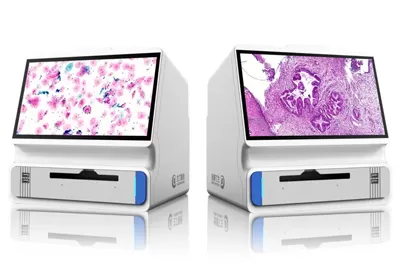
LD Patho 320A Compact and Portable Digital Pathology Slide Scanner
Perfect for smaller facilities or point-of-care settings, the LD Patho 320A delivers high-quality whole slide imaging in a space-saving, portable design. Its ease of use and rapid scanning make it an ideal entry point into digital pathology without compromising image quality.
LD Cyto2200 High Throughput Digital Pathology Slide Scanner
Built for high-volume laboratories, the LD Cyto2200 automates scanning of large slide batches with exceptional speed and reliability. It supports seamless integration into existing workflows while providing the scalability needed for growing diagnostic demands.
Both scanners produce outstanding digital images compatible with leading viewer software and AI platforms, including Landing Med’s own cytology analysis tools. By combining hardware excellence with integrated AI capabilities, Landing Med, one of the specialized digital pathology companies, empowers pathologists to achieve greater precision, efficiency, and confidence in every diagnosis.
Laboratories transitioning to digital pathology with Landing Med solutions typically report faster turnaround times, reduced operational costs, and improved staff satisfaction. Whether upgrading an existing workflow or building a fully digital lab from scratch, Landing Med provides scalable, future-proof options.
Moving from traditional microscope imaging to a digital pathology slide scanner workflow requires planning, but the long-term benefits far outweigh initial investments. Key steps include:
Assessing current and projected slide volume.
Selecting a scanner that matches throughput and budget needs.
Validating image quality and diagnostic equivalence.
Training staff on digital viewers and annotation tools.
Integrating with LIS, PACS, and AI platforms.
Many institutions start with a hybrid approach—scanning select cases while maintaining microscope review—before fully transitioning. Regulatory bodies in the US, EU, and other regions now support primary digital diagnosis, removing previous barriers to adoption.
Digital pathology slide scanners and whole slide imaging represent a transformative leap over traditional microscope imaging. They deliver superior ergonomics, collaboration, archiving, analytical power, and integration with AI—advantages that directly translate into better patient outcomes and more efficient laboratories.
For laboratories ready to modernize their workflow, Landing Med offers proven, cost-effective solutions tailored to every scale of operation. Explore our full range of digital pathology slide scanners and discover how the LD Patho 320A and LD Cyto2200 can elevate your diagnostic capabilities.


 fr
fr  es
es  CN
CN