Cervical cancer is one of the major diseases threatening women's health, especially in low- and middle-income countries, where its incidence and mortality rates remain high. In response to this challenge, artificial intelligence (AI) is rapidly becoming an essential tool for improving the quality and efficiency of cervical cancer screening.
In the field of cervical cancer screening, the application of AI is continuously advancing, playing a significant role particularly in cytology, colposcopy, and multimodal data fusion, bringing new opportunities to enhance screening efficiency and accuracy.
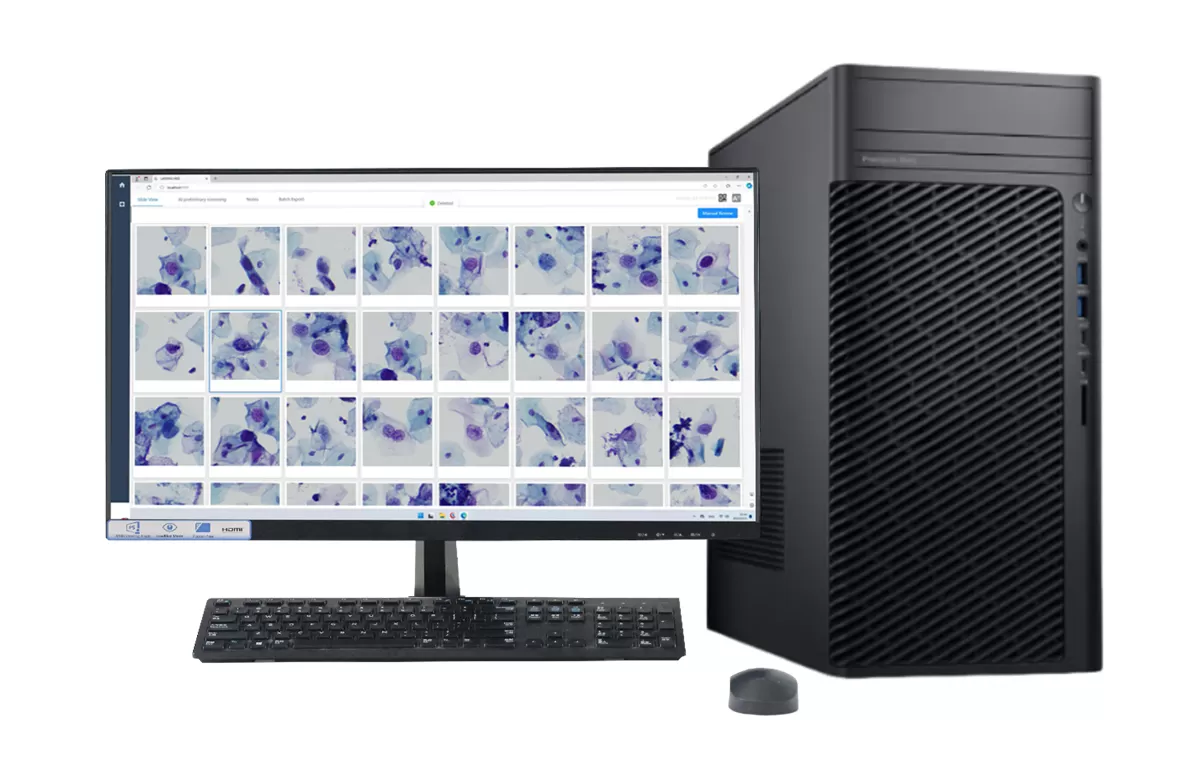
Cytology Image Analysis: Cytology image analysis is a critical component of AI cervical cancer screening. Traditional cytology screening relies on manual slide reading, which involves a large workload and is susceptible to subjective factors that can lead to missed diagnoses or misdiagnoses. Nowadays, with the aid of deep learning algorithms such as U-Net and CNN, AI cervical cancer screening can efficiently process cytology images. In cell segmentation, models trained with a large amount of annotated data can precisely delineate the boundaries of nuclei and cytoplasm, identifying abnormal cell morphology.
Colposcopy Image-Assisted Diagnosis: Colposcopy image-assisted diagnosis is another significant application direction in AI cervical cancer screening. Colposcopy examinations are highly subjective and demand substantial experience from doctors. In areas with limited medical resources, a shortage of professional colposcopists often affects screening quality. AI-assisted colposcopy diagnostic systems, which combine high-definition imaging and image recognition algorithms, can identify cervical lesions from annotated colposcopy images, evaluate suspicious areas, and guide biopsy procedures.
Multimodal Data Fusion: AI cervical cancer screening can integrate multiple sources of information such as HPV testing, cytology results, and imaging data to construct powerful risk prediction models. HPV testing, as an essential method in AI cervical cancer screening, when combined with cytology examinations and clinical information, can effectively predict the progression of high-risk HPV cases and the risk of cervical cancer. Prediction models built with machine learning algorithms, comprehensively considering factors such as age, menstrual status, behavioral factors, and results from HPV testing and cytology, can achieve individualized risk stratification management, providing a basis for formulating screening strategies.
Although significant progress has been made in the application of AI in cervical cancer screening, many challenges remain for wider and deeper application. Issues such as the generalization capability of models, data privacy, and the transparency and explainability of AI decisions need to be addressed urgently. AI is reshaping cervical cancer screening methods at an unprecedented pace. By further promoting the development and application of AI technology, we can expect to achieve higher quality AI cervical cancer screening services, thereby accelerating the pace towards the global elimination of cervical cancer.


 fr
fr  es
es  CN
CN