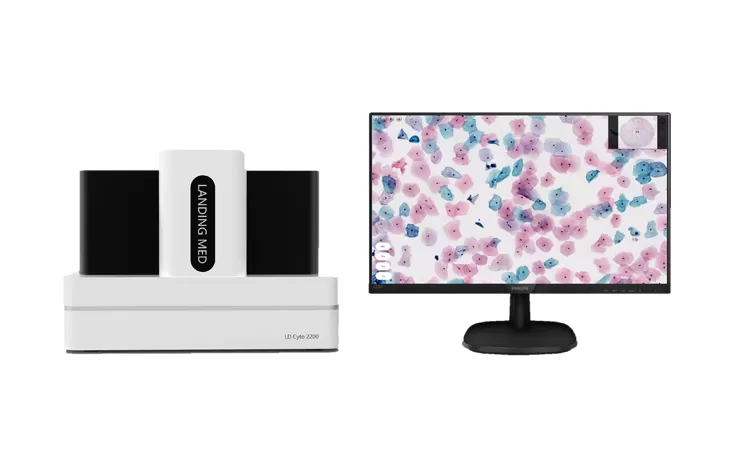
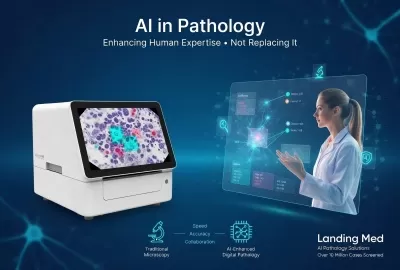
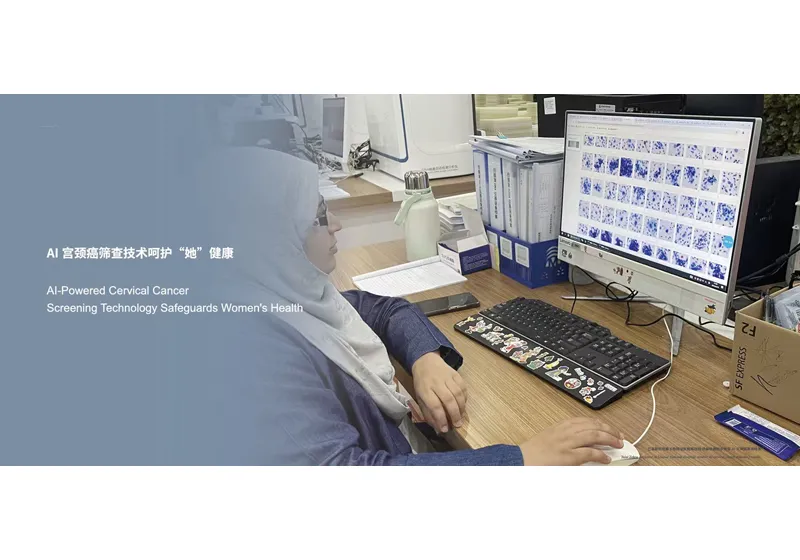
Histology, the study of microscopic tissue structures, has long relied on glass slides and optical microscopes. However, with the rapid evolution of digital healthcare technologies, laboratories are increasingly transitioning toward automated and data-driven workflows. At the center of this transformation is the digital pathology scanner, a critical tool that enables automated slide scanning and whole slide imaging. In this comprehensive guide, we explore what digital pathology scanners are, how they work, and why they are becoming essential in modern histology laboratories.
A digital pathology scanner is a specialized imaging system designed to convert traditional glass slides into high-resolution digital images for viewing, analysis, and storage. More specifically:
It automates the scanning of histology slides
Produces whole slide images (WSI)
Enables digital viewing similar to a microscope
These systems eliminate the need for physical slide handling and allow pathologists to work in a fully digital environment. These systems eliminate the need for physical slide handling and allow pathologists to work in a fully digital environment. Landing Med’s advanced digital slide scanner series is specifically engineered to capture every cellular detail with high fidelity, providing the perfect foundation for AI-assisted analysis.
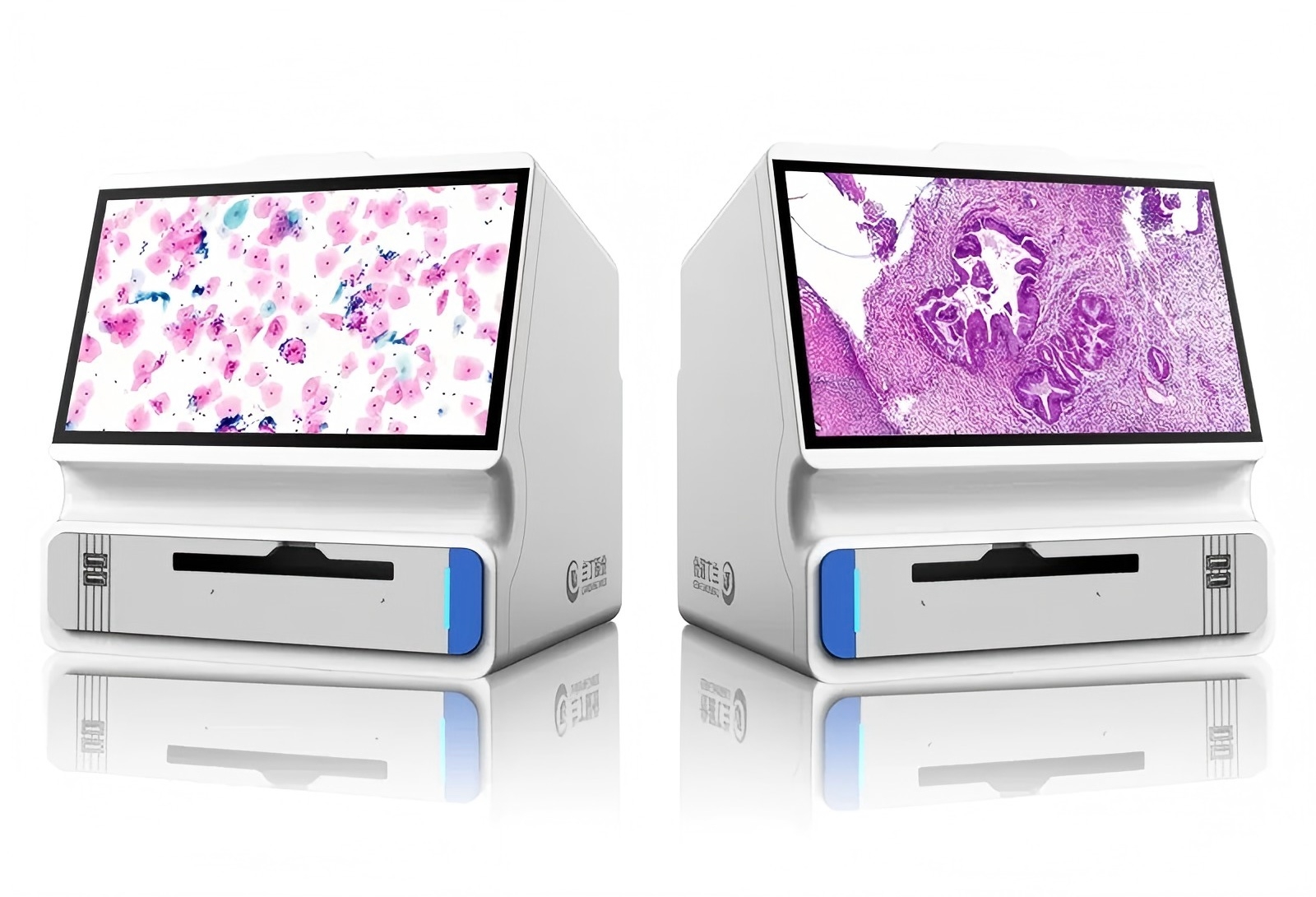
Automated Slide Scanner
A system that automatically loads, scans, and digitizes slides with minimal human intervention.
Whole Slide Imaging (WSI)
A technique that captures an entire tissue section at high resolution, allowing seamless zooming and navigation.
Histology Scanner
A scanner specifically optimized for tissue-based pathology workflows. In simple terms, a digital pathology scanner transforms physical samples into analyzable data.
The shift from traditional microscopy to automated slide scanning is not just a technological upgrade—it is a fundamental change in how pathology is practiced.
Slides must be physically present
Manual observation is time-consuming
Difficult to share or archive
Prone to variability between observers
Automated slide scanners overcome these limitations by enabling:
Remote access and telepathology
Faster case review and diagnosis
Digital storage and retrieval
Integration with AI tools
Digital slides can be accessed, analyzed, and shared instantly, improving both efficiency and collaboration. This is why many laboratories are moving toward fully digital histology workflows.
Understanding the workflow behind automated slide scanning helps explain its value in histology.
1. Slide Loading
Slides are placed into the scanner manually or via automated loaders capable of handling multiple slides simultaneously.
2. Tissue Detection and Autofocus
The system identifies tissue regions and adjusts focus automatically, even when sample thickness varies.
3. Image Acquisition
High-resolution cameras capture thousands of image tiles across the slide surface.
4. Image Stitching
Software combines these tiles into a single seamless whole slide image.
5. Digital Storage and Access
The final image is stored in a digital system and can be accessed remotely via specialized viewers.This automated process ensures consistent image quality and significantly reduces manual workload.
When selecting a digital pathology scanner, understanding the key technical features is essential.
Optical Resolution
Common magnifications: 20× and 40×
Determines clarity and diagnostic detail
Autofocus Technology
Critical for uneven tissue samples
Advanced systems use predictive focus mapping
Color Accuracy
Ensures consistent staining representation
Essential for reliable diagnosis
Scanning Speed and Throughput
Measured in slides per hour
Important for high-volume laboratories
Data Management
Whole slide images can be very large
Efficient compression and storage are required
These features directly impact diagnostic accuracy and workflow efficiency.
Digital pathology scanners are used across a wide range of applications:
Clinical Diagnosis
Cancer detection and grading
Routine histopathology analysis
Telepathology
Remote consultations
Multi-site hospital collaboration
Research and AI Development
Training machine learning models
Biomarker quantification
Education and Training
Digital slide libraries
Virtual microscopy for students
Automated slide scanning enhances accessibility and enables global collaboration in pathology.
Like any technology, automated slide scanners offer both advantages and challenges.
Benefits
Efficiency: Faster scanning and analysis
Consistency: Standardized imaging reduces variability
Accessibility: Remote access to slides
Durability: Digital slides do not degrade
Limitations
High initial investment
Large data storage requirements
Need for IT infrastructure
Workflow adaptation
Despite these challenges, the long-term benefits often outweigh the initial costs.
| Feature | Traditional Microscopy | Digital Pathology Scanner |
|---|---|---|
| Accessibility | On-site only | Remote access |
| Workflow | Manual | Automated |
| Data Storage | Physical slides | Digital archives |
| Collaboration | Limited | Real-time sharing |
| AI Integration | Not possible | Fully supported |
This comparison highlights why automated slide scanners are becoming the preferred choice in modern laboratories.
The future of histology is increasingly digital, automated, and AI-driven.
Emerging Trends
AI-assisted diagnosis
Cloud-based pathology platforms
Real-time image analysis
Improved autofocus and imaging algorithms
Digital pathology scanners are not just imaging tools—they are foundational to the future of precision medicine. Leading this trend, Landing Med is integrating cloud-based pathology platforms and real-time image analysis to democratize high-quality cancer screening. By reducing the reliance on scarce pathological resources, Landing Med’s digital slide scanner technology is making precision medicine a reality for underserved regions.


 fr
fr  es
es  CN
CN